Can a boundary fence be a pool fence?
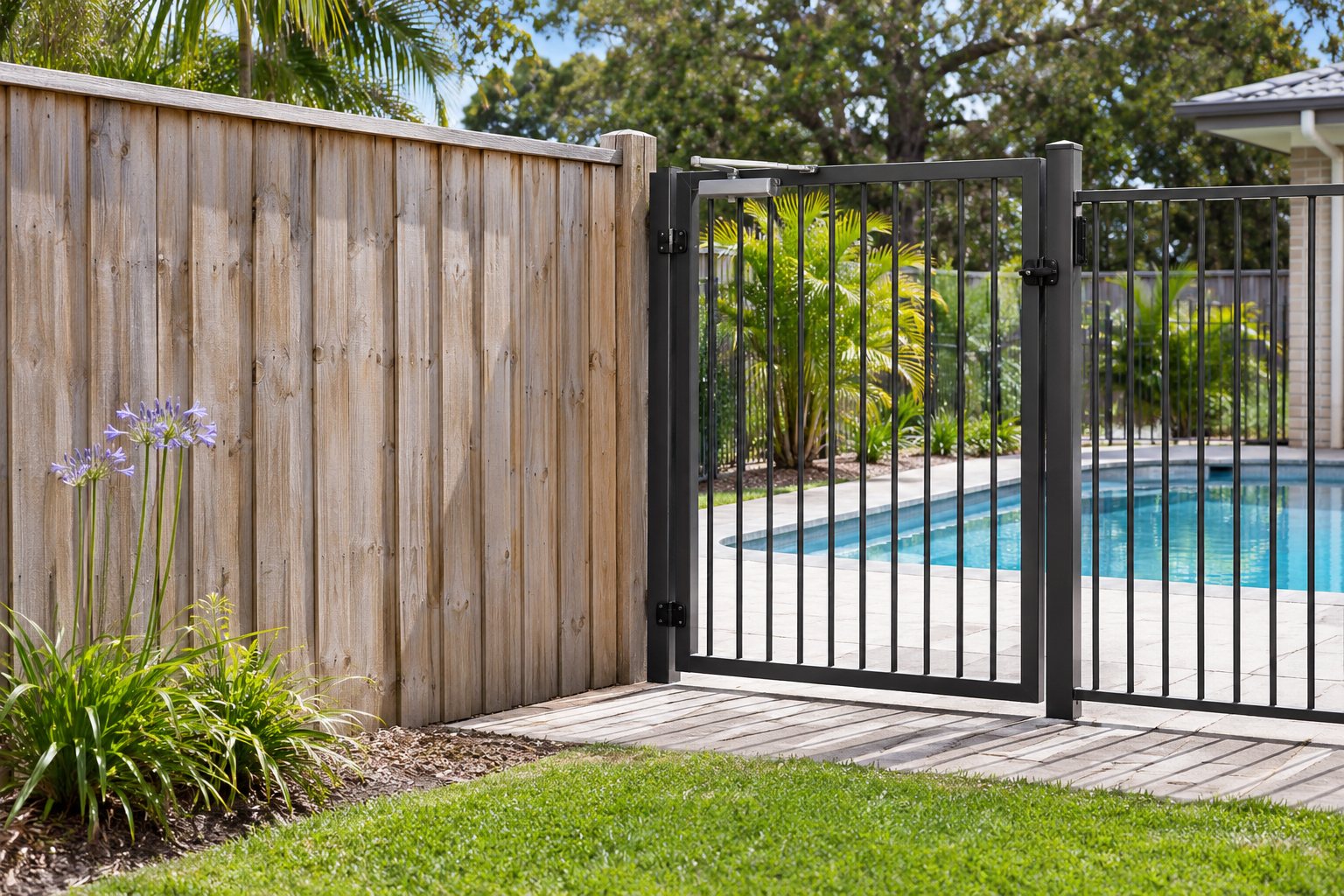
Sometimes it can. The Wagga council page speaks of the boundary fence as part of the pool fence and says it must be 1.8 m high, measured from inside the pool enclosure. That is the edition the council pages cite, AS 1926.1-2012. A 2024 edition has been published, and no NSW page we found says which edition a certifier applies to a new fence today. Whether your boundary fence qualifies is for the council or your certifier, so ask them before you rely on it. Legal Aid NSW adds that a boundary fence which is a pool barrier is paid for by the pool owner.
How high does the fence need to be
The same council page gives 1.2 m for the rest of the perimeter, and 1.8 m for a boundary fence that forms part of the barrier. The height, gaps and gates page lists the other figures and sets out the evidence on editions. A HIA article of 26 February 2026 says NCC 2025 overrides part of the revised standard and that boundary barriers must still meet the 500 mm clearance requirement. We give no clause detail, and the clearance question is covered on the non-climbable zone page. Source: HIA's boundary barriers article.
Do not assume an existing timber paling fence is the right height or in the right condition. Measure it from inside the pool area and ask the council or your certifier what they accept.
Gates in a boundary fence
The 2013 barrier book prepared for NSW councils says gates within a boundary fence are not acceptable, and that double gates are not acceptable either. It is older than the 2024 edition and cites the 2012 edition, so treat it as background. If you were planning a gate in a shared fence, ask the council before you cut one.
Who pays for a boundary fence that is part of a pool barrier
Neighbours normally share the cost of a sufficient dividing fence. The exception is a pool barrier. Legal Aid NSW's fences and boundaries FAQ says the exception is a fence that is a pool barrier, so the pool owner pays, and the owner of the property with the pool is responsible for all the costs to maintain, repair or replace it. Another NSW council's page says the same sharing rule does not apply if the fence is part of swimming pool fencing.
That is a statement about cost, not about permission. Talk to your neighbour first. A shared fence is their boundary too, and a short conversation before a contractor arrives is cheaper than a dispute after. What if the neighbour refuses? The pages we found do not cover the process. Ask Legal Aid NSW or the council.
Retaining walls, dividing fences and approval
The other council's page makes a general statement: retaining walls are generally not dividing fences unless the wall supports the fence. It describes that council's own approach, not Wagga's, and we do not describe any Wagga procedure from it. If a retaining wall sits near your pool barrier, the non-climbable zone page sets out what the sources say about walls and level changes. Whether a wall counts is decided by the council or the certifier.
The other council's swimming pools and fences page says council approval is needed only where a fence falls outside the exempt development criteria, and that in most cases dividing fences do not need approval. That is a general statement from another NSW council. For Wagga, ask Wagga City Council before you replace or raise a boundary fence that forms part of a pool barrier. Separately, Wagga policy POL 049 says each child-resistant barrier must be approved by the council's building surveyor or a private certifier, and the compliance page explains how an inspection runs.
Maintaining a shared fence, and talking to your neighbour
Section 7 of the Act says the barrier must be maintained as well as built. Legal Aid NSW says the owner of the property with the pool is responsible for all the costs to maintain a boundary fence that is a pool barrier. The council's maintenance list is short and practical: fasteners tight, broken palings fixed, self-closing hinges, locks and latches lubricated. A loose paling on a shared fence is therefore a cost for the pool owner, according to Legal Aid NSW, and the repairs page covers how a fault like that is quoted. If a neighbour's contractor has to be on your side, agree access first.
Have the facts ready. Which stretch of fence forms part of the barrier, and how high it is now. Whether you plan to raise, repair or replace it. Whether a gate is involved. That the pool owner pays, according to Legal Aid NSW, and roughly when the work is planned. Put any agreement in writing, and keep the contractor's quote with it.
Replacing or raising the fence
Replacing a boundary fence that forms part of the barrier is a pool owner cost, per Legal Aid NSW. The replacement and upgrades page covers renewing runs or a whole fence, and the cost guide lists what a quote should show. To get quotes, send your suburb, a photo and which side is the boundary, and we will pass it on. Licensing depends on the type and value of the work. The regulator pages we found do not say which category covers fitting or repairing a pool fence, so ask the contractor which licence or registration they hold.
What a rules page cannot do
It cannot tell you whether your neighbour's fence can be your pool barrier, how the council will treat a gate in a shared fence, or whether you need approval to change it. It reports what the Wagga council page, an older barrier book, Legal Aid NSW and another council's page say. It cannot say which edition of AS 1926.1 a certifier will apply, and it is not legal advice. Ask the council or your certifier, and Legal Aid NSW if there is a dispute.
Check the current rules before you rely on this
This page describes how NSW sources treat a boundary fence that forms part of a pool barrier, including the height, the gate question and who pays. It describes the rules in general terms as they stood in November 2026. Standards, forms, thresholds and fines change.
The authoritative sources are Wagga Wagga City Council, pool fencing requirements, Legal Aid NSW, fences, boundaries and retaining walls FAQs, Another NSW council, swimming pools and fences (dividing fences and pool fencing), Pool Safety Barrier Book NSW, prepared for NSW councils (version 2, 2013; flag: older, cites the 2012 edition) and HIA, amended AS 1926.1-2024 and NCC 2025 boundary barriers changes (26 February 2026). Where anything here differs from those sources, they are right and we are not.
We are not pool fencing contractors, certifiers, builders, regulators or lawyers. For what applies to your pool, ask Wagga Wagga City Council or your certifier which rules and which edition of the standard apply, ask the contractor which licence or registration they hold, and ask Building Commission NSW if you are unsure about licensing.
Accurate at the time of writing, November 2026. Always check the source before relying on it.