Glass vs aluminium pool fence: the short comparison
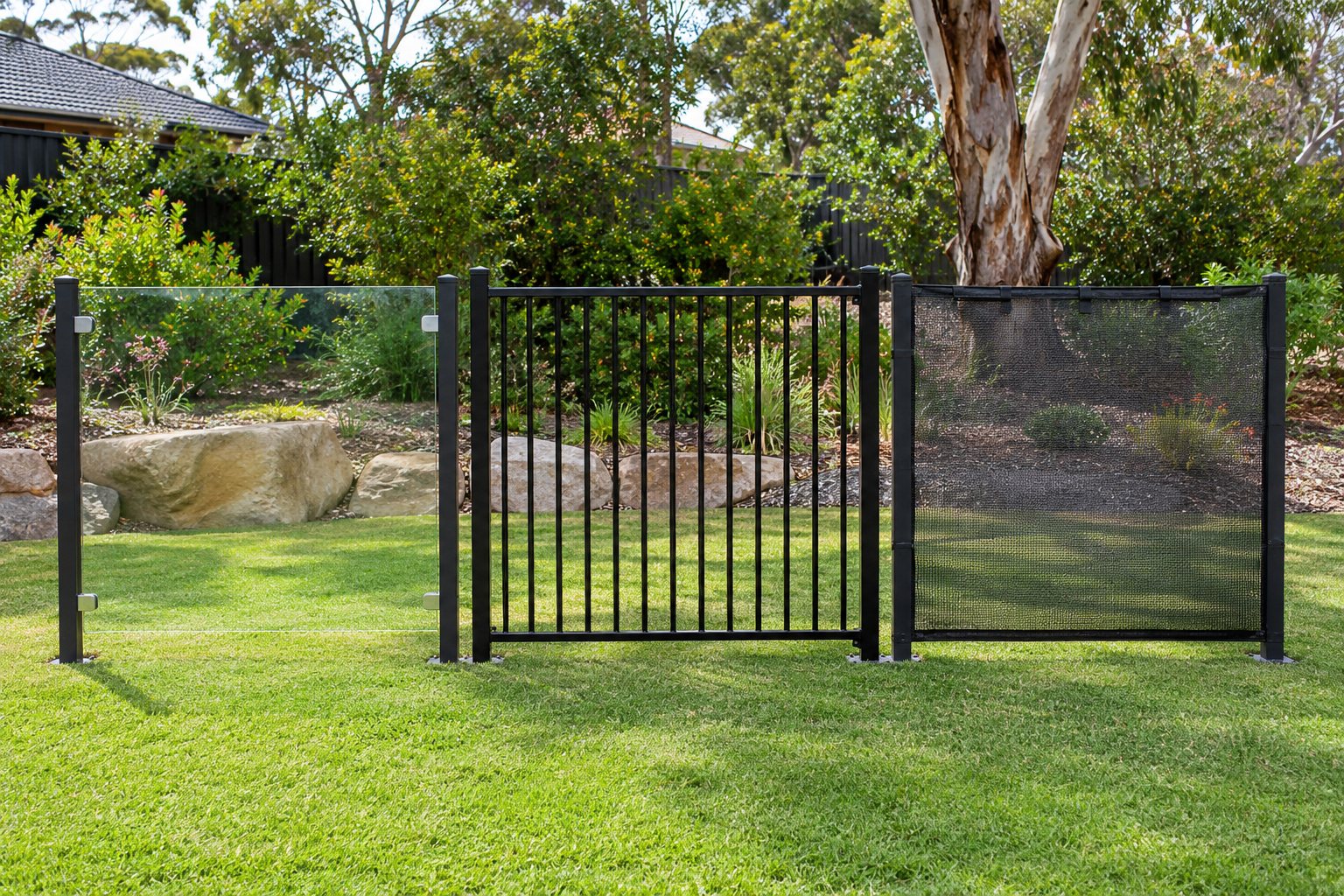
Glass, aluminium and mesh are the three types owners ask about. They differ in how they look, how they are fixed, what you see of the pool and how the gate is built. The pages we found do not rank them. The Wagga council page lists what it looks at, and the certifier decides whether a particular fence meets it. This guide sets the three side by side and sends you to the product pages for detail. It publishes no prices.
| What to compare | Glass | Aluminium | Mesh |
|---|---|---|---|
| Look | Clear panels with little visible structure. Frameless has no posts, semi-frameless has posts between the panels. | Pales and rails, often called flat-top or tubular. Suppliers list several powder-coat colours. | A fine mesh or perforated panel in posts. |
| How it is fixed | Frameless: clamps or spigots at the base. Semi-frameless: posts between panels. | Posts and rails fixed to concrete, pavers or ground. Ask how for your ground. | Panels in posts. Some mesh fences are removable; ask which kind is being quoted. |
| View of the pool | The water shows through the full panel. | The water shows through the gaps between pales. | The water shows through the holes in the mesh. |
| Gates | A glass gate with a latch and hinges. Ask for the gate's data sheet. | Ask for the gate's hinge and latch details. | Ask what gate and latch come with the panels. |
| What a certifier looks at | The same barrier checks as any fence. The preview of the 2024 edition says Grade A safety glass is used in glazing of glass pool barriers. | Height, the gaps between pales and the spacing of rails. See the height page. | The council page gives a hole size for mesh. Whether a removable mesh fence is accepted is for the certifier. |
| What to ask | The product's data sheet and any test report, and how the panels are fixed to your ground. | Whether the panel is made for pool barriers; ask for its data sheet and test report. | Whether the fence is permanent or temporary, and whether the certifier accepts it for your pool. |
The row on gates is deliberately plain. The Wagga council page says gates open outwards and are fully self-closing and self-latching, and the height, gaps and gates page covers what the council and other sources say about gates and latches.
Frameless or semi-frameless glass
Frameless glass is held by clamps or spigots at the base and has no posts. Semi-frameless glass has posts between the panels. Both are glass, and both are covered on the glass pool fencing page. One manufacturer's frameless glass installation guide describes 12 mm toughened Grade A glass panels and 8 mm gates for that product, and says pavers need a concrete footing underneath. Those are one product's specifications, not a rule for glass fences generally. Ask the contractor for the product's data sheet and installation requirements for your ground.
Aluminium: flat-top and tubular
Aluminium fences are sold as flat-top or tubular, and suppliers list several powder-coat colours. The aluminium pool fencing page covers panels, gates and gaps. For upkeep we make no claim about either metal or glass. Ask the manufacturer for its care instructions and put the answer in the quote.
Mesh and removable fences
The Wagga council page accepts mesh or perforated barriers at 1.2 m, with holes no larger than 13 mm. That is the edition the council pages cite, AS 1926.1-2012, and a 2024 edition has been published. No NSW page we found says which edition a certifier applies to a new fence today, so ask the council or your certifier before you buy mesh.
Removable mesh is a separate question. The preview of the 2024 edition says temporary pool fencing is outside its scope and is covered by another standard. No NSW regulator page we found says whether a removable mesh fence can be the permanent barrier for a certificate of compliance. So the only safe line is this: ask the certifier whether a removable mesh fence is accepted for your pool, and get the answer before you pay for it.
Temporary fences on a new pool
A new pool is a different case again. The NSW building-a-pool page says to install temporary child-resistant fencing during construction and to arrange an inspection by the principal certifier after the permanent fence is installed. A temporary fence for a build and the permanent barrier for a certificate are separate things. The cost guide explains what to ask the pool builder.
What the 2024 edition changes for glass
The 2024 edition adds new glass test methods, revised non-climbable zone diagrams and changes to gate latches and hinges, according to the preview page and Royal Life Saving Australia. We give no clause detail, because the preview is partial. HIA's article says the 2024 edition is referenced in NCC 2025, currently applies in Victoria and will not be enforced elsewhere until those states adopt NCC 2025. No NSW page we found says which edition a certifier applies to a new fence, so ask what your fence is designed to before choosing glass.
Choosing: the questions that matter
Start with what the fence is for. A fence for a sale, a lease, a repair or a new pool each has a different timetable. Then ask each contractor the same set of questions: the product's data sheet and any test report, the gate and latch supplied, how it is fixed to your ground, which edition it is designed to, who certifies it and what the warranty says. On a sloping yard, ask the contractor how each type would be built, because we make no claim about which type suits a slope. Can you mix types around one pool? We found no page that rules it in or out, and the Act says the pool must be at all times surrounded by a child-resistant barrier, so ask the certifier how the sections would meet. The repairs page covers fixing a fence you already have, and the Central, East, South and North Wagga page has local context.
What a comparison guide cannot do
It cannot tell you which fence to buy, because that depends on your yard, your pool and your budget, and we publish no prices. It cannot say which edition of AS 1926.1 a certifier will apply, whether a removable mesh fence is accepted for your pool, or which licence or registration covers fitting any of the three types. The council or your certifier decides on the fence, and the contractor decides how to build it. We pass your enquiry to local contractors and do not install, certify or quote.
Check the current rules before you rely on this
This page describes how glass, aluminium and mesh pool fences differ and what the Wagga council page and other sources say about each. It describes the rules in general terms as they stood in November 2026. Standards, forms, thresholds and fines change.
The authoritative sources are Standards Australia, AS 1926.1:2024 preview pages (partial, via ANSI webstore; flag: preview only, no clause detail), Wagga Wagga City Council, pool fencing requirements, Stratco, frameless glass pool fence installation guide V1.2 (one manufacturer's product; flag: attribute, never generalise), HIA, swimming pool barriers and the revised AS 1926.1 and Royal Life Saving Australia, new Australian Standard for home swimming pool safety released (3 September 2024). Where anything here differs from those sources, they are right and we are not.
We are not pool fencing contractors, certifiers, builders, regulators or lawyers. For what applies to your pool, ask Wagga Wagga City Council or your certifier which rules and which edition of the standard apply, ask the contractor which licence or registration they hold, and ask Building Commission NSW if you are unsure about licensing.
Accurate at the time of writing, November 2026. Always check the source before relying on it.