Pool fencing Lake Albert: mostly owner-occupied houses
Lake Albert owners deciding what to do about a pool fence are, on the census numbers, mostly deciding for their own homes. The ABS 2021 Census QuickStats for the suburb (Lake Albert QuickStats) give 6,291 people, a median age of 43 and 2,299 occupied dwellings, of which 95.6 per cent are separate houses and 3.4 per cent are flats. This page covers what Lake Albert owners deal with, and what the mix means: repairs and gates first, then the certificate you need if you sell, then the glass or aluminium decision if you replace. It is not a claim that Lake Albert has many pools, because no source we found counts pools by suburb.
| Census figure | Lake Albert, 2021 | What it tells a pool owner |
|---|---|---|
| Separate houses | 95.6 per cent | Almost every dwelling is detached, so a pool barrier is usually a matter between one owner, the council or a certifier, and a contractor. |
| Flats | 3.4 per cent | Few dwellings are flats. The NSW sale and lease document rules leave out some strata and community lots, and the census does not say which flats those are. |
| Owned outright | 41.6 per cent | Most dwellings are owned, so the person deciding on the fence is usually the person living behind it. |
| With a mortgage | 37.9 per cent | Together with the row above, close to eight in ten dwellings are owner-occupied. |
| Rented | 15.6 per cent | A minority, but the lease certificate rule applies to any rented pool. |
| Median age and household size | 43 years; 2.6 people | Descriptions of the population only. They say nothing about pools. |
The same QuickStats page gives 94.0 per cent of dwellings as occupied. Treat all of this as the shape of the suburb. The ABS does not say how old the fences are, what they are made of or which pools are fenced to which rules, and neither do we.
Pool fencing Lake Albert owners should check first: gates and repairs
A suburb where 41.6 per cent of dwellings are owned outright is a suburb where an owner may live with the same fence for years. We cannot say how old Lake Albert's fences are, and we found no source that does. What we can say is what the council looks at. The Wagga council pool fencing page lists the maintenance items: fasteners tight, broken palings fixed, self-closing hinges, locks and latches lubricated. It also says a gate that does not latch must stay fastened closed until it is fixed. Across the sources we read, gates that close and latch by themselves are the most repeated item of all.
A fence is one layer and supervision comes first. Royal Life Saving Australia's national report on child drownings (ten-year report) found that 78 per cent of the children aged 0 to 4 who drowned in a pool over ten years were not directly supervised. It has no NSW-specific figures, so we say "nationally" and leave it there. If a gate in Lake Albert has stopped latching, the repairs page explains what a repair enquiry involves and what to photograph for a quote.
If you sell a Lake Albert house with a pool
If you sell, the NSW Government owner page says the contract for sale must carry a registration certificate from the Swimming Pool Register plus one of three documents: an occupation certificate issued within the last 3 years, a valid certificate of compliance, or a certificate of non-compliance. The sale and lease certificate page sets out the documents, the 14-day and 90-day rules and the exceptions, so we do not repeat them.
Two things are worth doing early. Check that the pool is on the Register, which was replaced by an updated version on 16 March 2026 that ties registration to the property address. And ask the council or a registered certifier what they would look at on your fence, so that any repair is done before the contract goes out. The compliance page has the council's steps.
Glass or aluminium when a Lake Albert fence is replaced
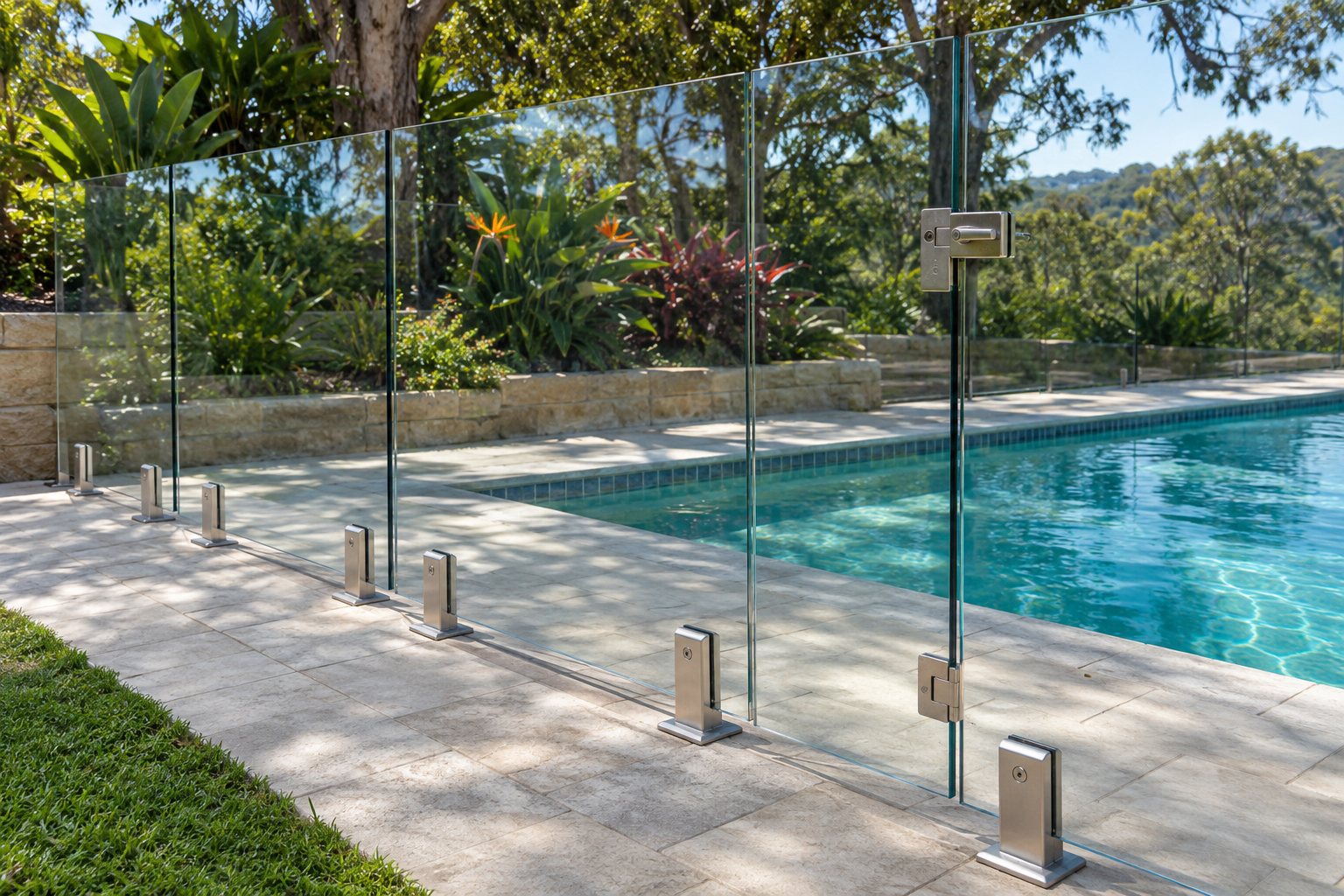
Two fence types take up most of the sources we read, and they have their own pages: glass and aluminium. Glass can be frameless, held at the base with no posts, or semi-frameless, with posts between panels. Aluminium is sold in flat-top and tubular styles. The comparison guide sets them side by side. We do not choose for you, and we give no prices.
The council's measurements for any new fence, such as heights, gaps and gates, are on the height, gaps and gates page, each attributed to the page that gives it.
Older pools, editions and who does the work
If your pool is old, the Swimming Pools Regulation 2018 (version in force 30 June 2024) treats an existing barrier as complying if it complied with the standard that applied at the time and still does. The NSW page says barriers modified during renovations must meet AS1926.1-2012 and previous exemptions end. Check any measurement you read against the edition the council pages cite (AS 1926.1-2012): a 2024 edition has been published and no NSW page we found says which edition a certifier applies to a new fence today. Ask the council or your certifier.
Only the council or a registered certifier inspects a pool barrier, as the Service NSW certifier page shows for private certifiers. Licensing depends on the type and value of the work, and the regulator pages we found do not say which category covers fitting or repairing a pool fence. Ask the contractor which licence or registration they hold, check it on the NSW licence check and ask Building Commission NSW if you are unsure; the licensing page has the detail.
When you send an enquiry, include your street or suburb, a photo of the fence and gate, the year the pool was built if you know it, why you need the work (repair, sale, lease, upgrade) and whether a boundary fence forms part of the barrier. We pass it to a local contractor. For the wider picture across the city, see Central, East, South and North Wagga, or start from the home page.
What this page cannot settle
It cannot say how many pools Lake Albert has, how old its fences are or whether yours would pass an inspection. The census figures describe people and dwellings, and a median age or an owner share tells you nothing about pools. It cannot say which edition of AS 1926.1 your certifier applies, and it cannot say which licence or registration a contractor needs. It gives no prices. The council or your certifier decides on your fence, and the contractor you choose is responsible for the work and for any licence or registration that applies to it.
Check the current rules before you rely on this
This page describes pool fencing for Lake Albert owners, the suburb's census housing figures and the NSW rules for repairs, sales and certificates. It describes the rules in general terms as they stood in November 2026. Standards, forms, thresholds and fines change.
The authoritative sources are ABS 2021 Census QuickStats, Lake Albert (suburb), Wagga Wagga City Council, pool fencing requirements, NSW Government, owning a pool or spa: your obligations (updated 16 March 2026), Swimming Pools Regulation 2018 (NSW), version in force 30 June 2024, Service NSW, apply for swimming pool certifier registration (2 July 2025) and Royal Life Saving Australia, child drowning report, July 2015 to June 2025 (national, no NSW figures). Where anything here differs from those sources, they are right and we are not.
We are not pool fencing contractors, certifiers, builders, regulators or lawyers. For what applies to your pool, ask Wagga Wagga City Council or your certifier which rules and which edition of the standard apply, ask the contractor which licence or registration they hold, and ask Building Commission NSW if you are unsure about licensing.
Accurate at the time of writing, November 2026. Always check the source before relying on it.