Glass pool fencing in Wagga Wagga: what you are buying
Glass pool fencing in Wagga Wagga means glass panels standing around the pool in place of a row of pales. Suppliers describe two types. Frameless panels are held at the base by clamps or spigots and have no posts. Semi-frameless panels sit between posts. We are a referral service: we pass your enquiry to a local contractor, who supplies and fits the fence and answers for the work.
This page covers the product, what moves the cost and what a council or certifier checks. Two questions it cannot settle for you are which edition of AS 1926.1 your fence is built to and which licence or registration the work needs. Both come up below, and for both the answer is to ask.
Frameless glass pool fence: spigots, clamps and no posts
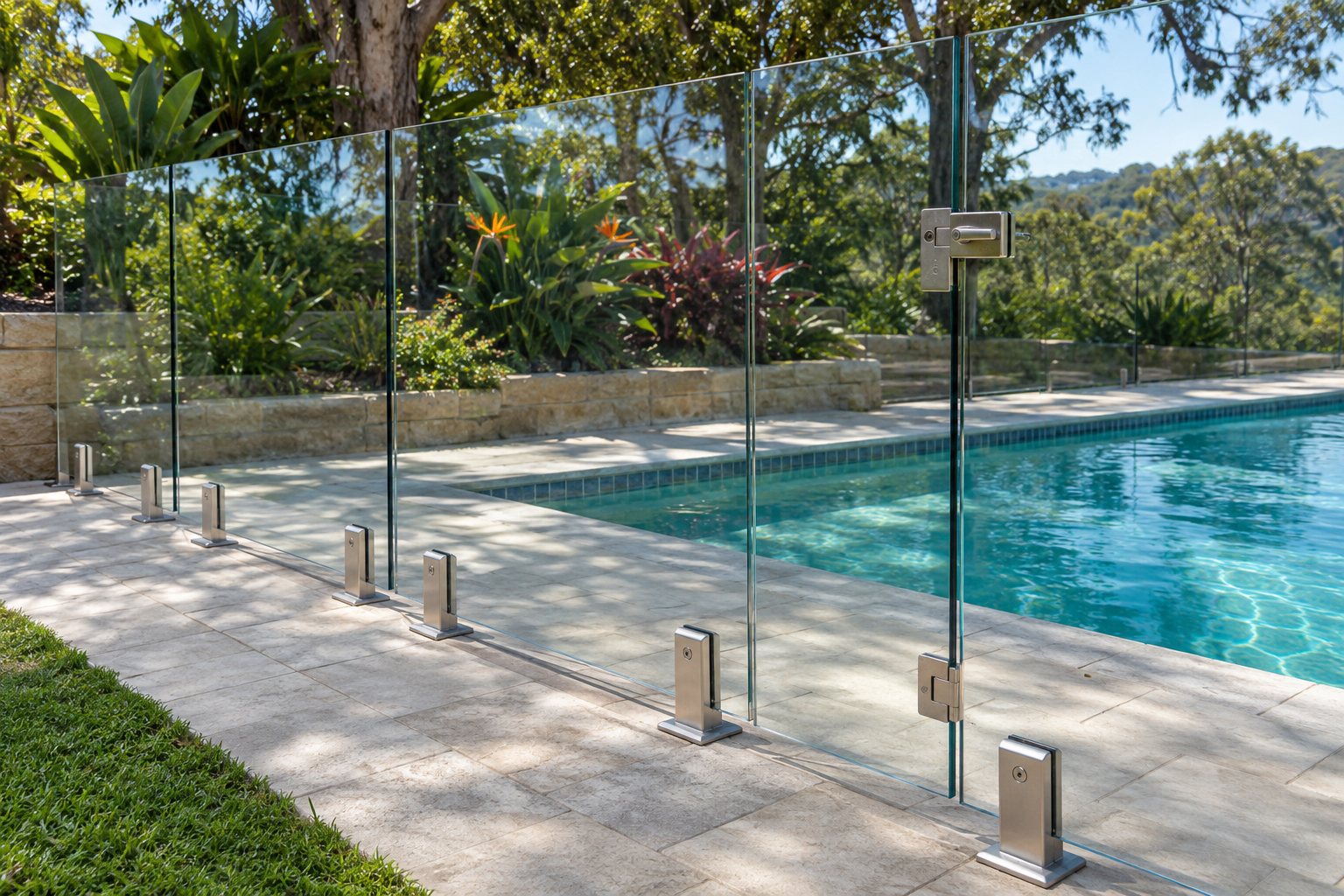
A frameless glass pool fence has each panel fixed at its base. The photo shows stainless spigot bases set into pavers, which is one way of doing it. Plates and clamps are another, and the contractor decides which suits your surround. Because there are no posts, the fixing and the ground under it matter, which is why the ground is a cost driver.
Semi frameless pool fencing: panels between posts
Semi-frameless pool fencing keeps the glass but adds posts between the panels. Which of the two you choose is a matter of look, site and what the contractor recommends. If you are still weighing glass against aluminium or mesh, the comparison of glass, aluminium and mesh sets the options side by side.
What glass is used, and what the sources do not say
The preview of the 2024 edition of AS 1926.1 says Grade A safety glass is used in glass pool barriers. We found no NSW regulator page that gives a glass thickness for a pool fence, so any thickness you see quoted is a product specification and not a rule. One manufacturer's frameless glass installation guide, for example, specifies 12 mm toughened Grade A panels and 8 mm gates for its own system. Read that as one product's figure. Ask the contractor for the product's data sheet and installation requirements, and ask the certifier what applies to your fence.
According to the preview page and Royal Life Saving Australia, the 2024 edition adds new glass test methods, revised non-climbable zone diagrams and changes to gate latches and hinges. We do not give clause detail, because the preview is partial.
Pavers, concrete and the ground under the glass
The surface the glass stands on matters with frameless fencing. The same manufacturer's guide says pavers need a concrete footing underneath. That is its installation requirement for its product, not a rule for every system. Ask the contractor how your surround will be prepared, whether the glass is fixed into concrete or onto plates, and what the quote assumes about the ground. Say whether the paving is down yet, because the state of the ground affects the quote.
What a council or certifier checks on a glass fence
The Wagga council page sets out barrier requirements for gates, gaps, heights, the non-climbable zone and maintenance. We found no separate list for glass on it. The figures on the page are from the edition the council pages cite (AS 1926.1-2012). A 2024 edition has been published and no NSW page we found says which edition a certifier applies to a new fence today. Ask the council or your certifier which edition and which dimensions apply to your pool and fence before you buy or build. The height, gaps and gates page lists the figures and the sources side by side.
Gates deserve a separate question. The council page also sets a minimum latch height for pool doors, and sources differ on latch figures, so this site gives none. Read the council page, then ask the contractor which latch and hinges the glass system uses and whether the certifier is comfortable with them. The council's Swimming Pool Safety Policy says each barrier must be approved by the council's building surveyor or a private certifier, and the compliance and inspections page covers how that works in Wagga.
What moves the cost of glass pool fencing
This site does not publish prices, because the numbers depend on your pool and a figure on a web page cannot know them. The things that move a glass quote are:
- the length of fence and the number of corners;
- the glass type and the product's specification;
- frameless or semi-frameless, and so how many posts or fixings;
- the gate, its hinges and its latch;
- the ground: concrete, pavers, a bank or slope, core drilling or plates;
- whether an old fence has to come out first;
- certification, inspection and any re-inspection fees, and who arranges them.
Ask whether the quote includes delivery and installation, and which edition the fence is designed to. The cost guide explains each driver and what a written quote should itemise.
Delivery, handling and who does the work
Glass panels are heavy. SafeWork NSW published an incident release in April 2026 about falling glass panels. Ask the contractor how glass delivery and handling are managed.
Licensing depends on the type and value of the work. The regulator pages we found do not say which category covers fitting or repairing a pool fence. Ask the contractor which licence or registration they hold, check it on the NSW licence check, and ask Building Commission NSW if you are unsure. The licensing and quotes page sets out what each NSW page says. For the suburbs, the city page adds local housing facts, and the contact page is where an enquiry starts.
What this page cannot do
This page cannot tell you which edition of AS 1926.1 your fence will be built to, what thickness of glass your site needs or whether a particular fence will pass an inspection. The council or your registered certifier decides that. It cannot say which licence or registration covers the work, because the NSW pages do not settle it, so ask the contractor and check the licence. It cannot give a price and it does not recommend a product. The manufacturer's figures above belong to one product only.
Check the current rules before you rely on this
This page describes glass pool fencing and what the council pages, the NSW Government and a 2024 standards preview say about it. It describes the rules in general terms as they stood in November 2026. Standards, forms, thresholds and fines change.
The authoritative sources are Standards Australia, AS 1926.1:2024 preview pages (partial, via ANSI webstore; flag: preview only, no clause detail), Stratco, frameless glass pool fence installation guide V1.2 (one manufacturer's product; flag: attribute, never generalise), SafeWork NSW, serious injuries involving falling glass panels (20 April 2026), Wagga Wagga City Council, pool fencing requirements, NSW Government, owning a pool or spa: your obligations (updated 16 March 2026) and Royal Life Saving Australia, new Australian Standard for home swimming pool safety released (3 September 2024). Where anything here differs from those sources, they are right and we are not.
We are not pool fencing contractors, certifiers, builders, regulators or lawyers. For what applies to your pool, ask Wagga Wagga City Council or your certifier which rules and which edition of the standard apply, ask the contractor which licence or registration they hold, and ask Building Commission NSW if you are unsure about licensing.
Accurate at the time of writing, November 2026. Always check the source before relying on it.